


Introduction: Walking the Old Town Rings of Lisbon
Lisbon unfolds in concentric circles: from the sunny riverfront up through the maze-like alleys that climb to the castle, each “ring” of the historic center promises discoveries. The Walking the Old Town Rings route is more than a tourist trail — it’s a sensory immersion of sweeping views, azulejo tiles, the clatter of trams and the smells of Portuguese cooking. Starting from the broad esplanade of Praça do Comércio and winding up to the heights of Castelo de São Jorge, you’ll pass through Baixa, Chiado, Bairro Alto, Alfama and Mouraria — neighborhoods braided together like rings around the Tagus.
Contenu de l'article
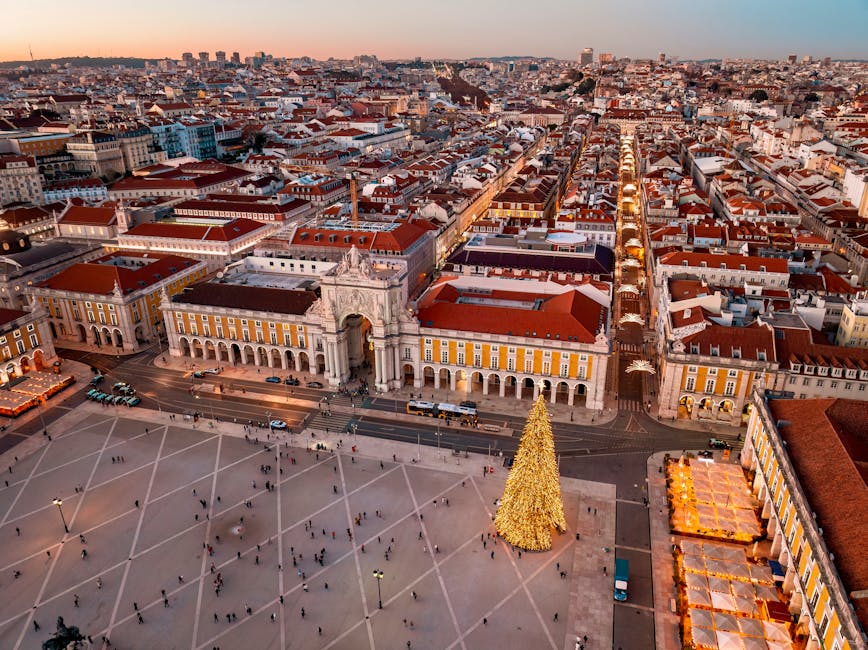
To orient yourself: Praça do Comércio is located at Praça do Comércio, 1100-148 Lisboa; it’s a public square open 24/7 (surrounding monuments and museums may have separate opening hours). This wide riverfront is a perfect place to begin your walk, unfold your map and breathe in the Tagus air before slipping into narrower lanes. That visual and spatial intro makes Lisbon’s relief easier to read: the river to the south, slopes rising northward, and picture-book charm clinging to the tree-lined hills.
Before you set out, a few practical tips: wear comfortable walking shoes (cobbles and hills), bring a water bottle and carry some euros in cash for tickets and snacks. The historic tram 28 is tempting but often packed; plan to climb on foot to savor the little details — painted doors, green mailboxes, tiny chapels — that make the city special. Opening times and prices mentioned here are indicative: always double-check official sites before your visit.

Ring 1 — Baixa and the Riverfront: from commerce to city viewpoint
Baixa is Lisbon’s neoclassical core, rebuilt after the 1755 earthquake. Walking through it you’ll notice the scale of its open squares, symmetrical facades and busy shopping streets. Start at the dazzling Praça do Comércio (Praça do Comércio, 1100-148 Lisboa), then stroll up the Rua Augusta to the monumental Arco da Rua Augusta (Arco da Rua Augusta, Praça do Comércio): the arch is sometimes open to visitors and offers a direct panorama over Rua Augusta and the river. Access to the arch viewpoint is ticketed (indicative price: ≈ €3.50) and opening hours change with the season (typically 09:30–19:30 in high season).
Another iconic vantage point is the Elevador de Santa Justa (Rua do Ouro, 1150-060 Lisboa), the cast-iron lift that links Baixa to Largo do Carmo. The ride up to the panoramic terrace usually costs (indicative price for terrace access: ≈ €5.00); hours are commonly around 07:30–21:00 and may be extended in summer. From its platform you’ll take in Baixa, the Tagus and the surrounding hills — a superb spot for photos.
Logistics-wise, Baixa is served by the metro (Terreiro do Paço station for Praça do Comércio) and several bus lines. For convenience, the river terminal and connections to Belém are just a short walk away. In the evening, the golden light on Rua Augusta’s arcades makes for a particularly pleasant stroll.
 Click here to book your ticket for the Rua Augusta Arch

Ring 2 — Chiado and Bairro Alto: historic cafés, bookstores and bohemian outlooks
From Baixa you climb into Chiado, the literary, stylish quarter, and then reach Bairro Alto, the bohemian neighborhood famed for its bars and miradouros. Chiado is home to institutions like the Livraria Bertrand (Rua Garrett 73-75, 1200-203 Lisboa), said to be the oldest continuously operating bookstore in the world — indicative hours: 09:30–19:00. Right next door, stop at the legendary A Brasileira (Rua Garrett 120, 1200-205 Lisboa), immortalized by the statue of Fernando Pessoa: grabbing a coffee and a pastel de nata there is a local ritual (coffee ≈ €1.50–3.50, pastel de nata ≈ €1.10–1.80).
Then head up to the Miradouro de São Pedro de Alcântara (Rua de São Pedro de Alcântara, 1250-237 Lisboa) for a cascading view of the castle and Baixa. This viewpoint is free and comes alive at dusk with photographers and onlookers. For nightlife lovers, Bairro Alto offers fado clubs and bars with atmospheres that shift through the night: the neighborhood really wakes up after around 22:00.
Practical tips for Chiado and Bairro Alto: aim to arrive mid-afternoon so you can enjoy sunset at the miradouro; avoid the busiest times for tourist trams to keep a relaxed pace; for dinner, expect locals to eat around 20:00–21:30. The Rua Garrett and surrounding lanes are dotted with small design and craft boutiques if you’re shopping.

Ring 3 — Alfama: alleys, viewpoints and the breath of fado
Alfama is Lisbon’s oldest quarter: narrow lanes, stairways, flowered windows and miradouros that look down over the Tagus. Begin at the Sé de Lisboa (Catedral Sé Patriarcal, Largo da Sé, 1100-585 Lisboa): the Romanesque cathedral, often open from 09:00 to 19:00, is largely free to visit, though access to the treasury and cloister may cost a small fee (indicative price: ≈ €2–3).
Continue to the Miradouro das Portas do Sol (Alfama) and the Miradouro de Santa Luzia (Largo Santa Luzia, 1100-487 Lisboa): these viewpoints offer postcard-ready perspectives over red roofs, boats on the Tagus and tiled facades. Santa Luzia sometimes hosts small works by local artists. If you want to experience fado live, book an evening at the Clube de Fado (Rua de São João da Praça 92, 1100-521 Lisboa) or at the Casa de Linhares (Rua dos Bacalhoeiros 10, 1100-070 Lisboa) — dinner-shows typically range from €20.00 to €50.00 per person depending on the menu and the performance.
Practical note: Alfama is a delightful tangle where it’s easy to get lost on purpose. Carry a paper map or keep GPS handy, but leave room for blind discovery: every turn can reveal a quiet square, a neighborhood chapel or a tavern serving bacalhau. Keep an eye on shop hours: many open in the morning, close in the early afternoon, and re-open in the evening.
Click here to book a fado evening in the Alfama neighborhood

Ring 4 — Castelo and Mouraria: history, panoramas and multicultural life
At the top of the old town sits the Castelo de São Jorge (Castelo de São Jorge, R. de Santa Cruz do Castelo, 1100-129 Lisboa), a defensive symbol and strategic lookout over the city and the river. Typical hours are around 09:00–21:00 in high season and 09:00–18:00 in low season; adult tickets are roughly ≈ €10.50. The site includes ramparts, towers, gardens and a small archaeological museum. Sunsets from the castle balconies, when the sky lights up over the Tagus, are among the highlights of the walk.
On the way down toward the east, pass through the Mouraria, a multicultural neighborhood shaped by waves of immigration and known for its vibrant food and music scene. A cultural stop worth making is the Casa dos Bicos (Rua dos Bacalhoeiros 10, 1100-070 Lisboa), a striking façade with its characteristic “spikes” and an exhibition space linked to the José Saramago Foundation; exhibition hours vary — often 10:00–18:00 and sometimes free for certain shows.
Local tip: the slopes up to the castle are steep but dotted with stopping points. Allow half a day to explore Castelo and Mouraria at a relaxed pace, with a coffee break and a visit to the small archaeological museum at the castle. In hot weather, prioritize morning or late-afternoon visits to avoid crowds and direct sun on the cobbles.
Click here to book a skip-the-line ticket for São Jorge Castle

Ring 5 — Back to the River and the Food Scene: quays, markets and Lisbon flavors
The loop closes as you head back toward the river, through Cais do Sodré and the quay areas. A must for tasting Lisbon is the Time Out Market Lisboa (Mercado da Ribeira, Avenida 24 de Julho 49, 1200-479 Lisboa): a large covered market gathering stalls and contemporary chefs, usually open from 10:00 to 00:00 and sometimes later on certain nights. Prices vary: tapas or a pastel de nata start from around ≈ €3, while a seafood dish can range ≈ €12–30.
For more traditional eats, hunt down small tascas serving bacalhau à bras (shredded cod with potatoes and eggs) or grilled sardines. Indicative prices: a main course at a local tavern ≈ €10–25. For an instant dessert fix, the famous pastel de nata is often sold at about ≈ €1.10–1.80 depending on the bakery.
Transport and budget: if you plan to visit several museums and climb multiple viewpoints, consider the Lisboa Card (24/48/72-hour options) which includes public transport and discounts at many sites — indicative prices: ≈ €20–40 depending on duration. Otherwise, buying single tickets (tram, metro, lifts) is straightforward: keep a rechargeable Viva Viagem card for public transport (initial card cost ≈ €0.50, fares vary).

Conclusion: tips to make the most of the stroll
Walking the Old Town Rings of Lisbon is an experience to be savored slowly: each ring reveals a slice of the city’s history, culture and everyday life. To get the most out of it, time your stops by the hour: Baixa in the morning for light on the facades, Chiado in late afternoon for coffee, Alfama at sunset for fado, and Castelo for an evening panorama. Pack suitable shoes, a light layer for the Tagus breeze and a refillable water bottle — public fountains often let you top up.
Safety and local respect: Lisbon is generally safe but, like any major tourist city, watch out for pickpockets in very busy areas (tram 28, viewpoints, metro stations). Use cards for payments in formal establishments and keep some cash for tiny tascas or street vendors. Finally, take time to listen: the sound of a Portuguese guitar drifting from a side street can be one of the day’s most memorable moments.
Last practical steps: check monument opening times and prices before you go; if you travel in high season, book tickets for Castelo de São Jorge, fado dinner-shows and certain exhibitions. With these pointers, the walk around the rings becomes less of a race and more of a sensory route — a real itinerary for feeling Lisbon through its stones, sounds and flavors.